
Loss of Facial Volume in Vancouver — Including After Weight Loss
A face that looks flatter through the cheeks, hollower at the temples or less defined along the jaw has usually lost volume, not just skin firmness. Facial fat pads shrink and shift with age, and the same change can happen much faster after significant weight loss — including weight loss on GLP-1 medications such as Ozempic, a pattern often called “Ozempic face.” The skin itself has not necessarily worsened; it has less structure underneath it. At Aurora 80 Aesthetics, volume loss is treated by rebuilding support, either directly with dermal filler or gradually with Sculptra, which stimulates your own collagen. The approach is conservative and staged, so your face still looks like your face throughout the process.
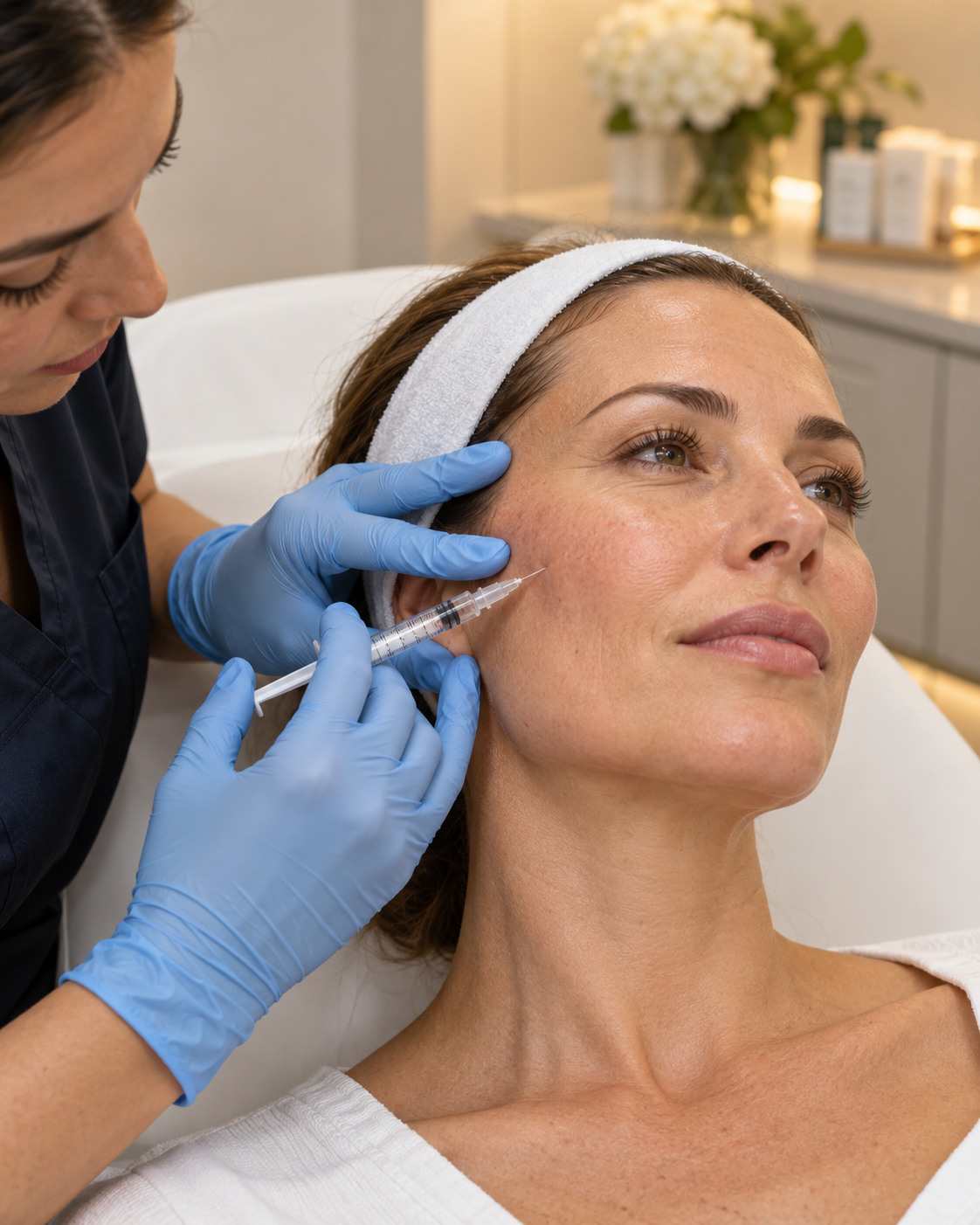
What causes loss of facial volume?
- Aging: Fat pads in the cheeks, temples and under the eyes shrink and descend over time, and bone structure remodels as well. Collagen loss means less firmness in the skin that remains.
- Rapid or significant weight loss: When body weight drops quickly, facial fat is lost too, and the skin may not contract at the same pace. This has become much more common with GLP-1 medications (such as Ozempic and similar drugs prescribed for diabetes and weight management), and it can make people look older than their weight loss makes them feel.
- Illness and lifestyle: Extended illness, very low body fat from endurance training, stress and poor sleep can all contribute.
Treatments that help
- Sculptra: An injectable biostimulator that prompts your body to produce its own collagen over several months. It suits broad, gradual volume restoration — cheeks, temples and overall facial support — and is a common choice after weight loss because the improvement is progressive and the results are long-lasting once built.
- Dermal fillers: Hyaluronic acid fillers restore volume immediately in specific areas: cheeks, temples, tear troughs, jawline and lips. Useful where a defined area needs support now, or in combination with Sculptra.
- NOUVADerm laser: Addresses the skin quality side of the picture — texture and firmness at the surface — while injectable treatments rebuild structure beneath it.
- PRP and exosome treatments: Regenerative options that support skin quality and thickness, used as part of a broader plan where the skin itself has become thinner or less resilient.
- Aura 3D skin analysis: 3D imaging documents facial volume and skin condition at the start of a plan, so gradual change over months can be measured objectively.
Frequently asked questions
What is “Ozempic face”?
It is an informal term for the facial volume loss that can follow rapid weight loss, including weight loss on GLP-1 medications such as Ozempic. The medication does not damage the face directly — the change comes from losing facial fat quickly, which can leave the face looking hollow or aged. It is treatable with the same volume-restoration approaches used for age-related volume loss.
Should I finish losing weight before treating volume loss?
Generally, yes — it is more efficient to treat once your weight is stable, so the plan is built for the face you will keep. That said, a consultation during your weight loss can still be useful for planning, and skin-quality treatments can begin earlier. Your nurse will advise based on where you are in the process.
What is the difference between Sculptra and filler for volume loss?
Filler adds volume immediately and precisely in a specific area. Sculptra works gradually, stimulating your own collagen over months, and suits larger areas and overall support. They are frequently combined: Sculptra for broad restoration, filler for defined areas that need immediate structure.
How long does Sculptra take to work, and how long does it last?
Improvement develops gradually over several weeks to months as collagen is produced, and a series of sessions is usually recommended. Once the desired result is built, it is among the longer-lasting injectable results, commonly maintained for two years or more.
Will restoring volume make my face look puffy or overdone?
It should not. Volume restoration at Aurora 80 is staged and conservative — the aim is to replace what was lost, in the places it was lost from. Your nurse will show you a plan and expected progression before treatment begins, and treatment can always be paused or adjusted between sessions.
Whether your volume loss is age-related or followed significant weight loss, book a consultation at Aurora 80 Aesthetics in Coal Harbour for an honest assessment and a staged plan. Book online: https://aurora80aesthetics.janeapp.com
Book a Consultation