
Dull, Dehydrated Skin in Vancouver
Skin that looks flat, rough or tired — where makeup sits poorly and moisturiser never seems to be enough — is usually dealing with a build-up of dead skin cells on the surface and a lack of water in the skin itself. The two problems feed each other: dry surface cells scatter light instead of reflecting it, which is why dehydrated skin loses its glow even when it is not technically dry skin. At Aurora 80 Aesthetics, treatment focuses on removing that dull surface layer and restoring hydration, with options ranging from a single HydraFacial before an event to a planned series of laser and regenerative treatments for longer-term improvement in skin quality.
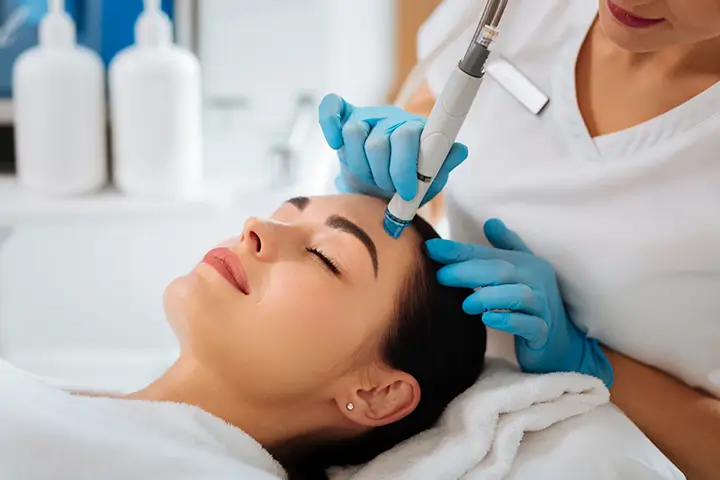
What causes dull, dehydrated skin?
- Dead cell build-up: Skin sheds cells constantly, and the process slows with age. Cells that linger on the surface make skin look flat and feel rough.
- Dehydration: Skin can lack water even if it produces enough oil. Weather, indoor heating, air conditioning, travel and not drinking enough water all contribute.
- Sun exposure: UV damage affects texture, tone and the skin’s ability to hold moisture.
- Lifestyle: Poor sleep, smoking, alcohol and harsh or over-frequent exfoliation can all strip the skin barrier, which then loses water faster.
Treatments that help
- HydraFacial: A multi-step treatment that cleanses, gently exfoliates, extracts congestion and infuses the skin with hydrating serums. There is no downtime, and it suits most skin types, including before events.
- NOUVADerm laser (including NouvaGLOW): A non-ablative laser treatment aimed at overall skin quality, tone and texture, supporting collagen renewal while it refreshes the skin’s surface.
- Exosome treatments: Exosomes support the skin’s repair and regeneration processes and can be included in a treatment plan where skin quality and recovery are the goals.
- Aura 3D skin analysis: A 3D imaging assessment that measures hydration-related skin parameters and surface condition, so a plan can be built on your skin’s actual state and progress can be tracked.
Frequently asked questions
What is the difference between dry skin and dehydrated skin?
Dry skin lacks oil and is a skin type. Dehydrated skin lacks water and is a temporary condition that can affect any skin type, including oily skin. The treatments overlap, but the distinction matters for your home care routine, which your nurse can advise on.
How soon will my skin look better after a HydraFacial?
Most clients notice their skin looks and feels more hydrated immediately after treatment, with no downtime. It is a popular choice in the days before an event.
How often should I have a HydraFacial?
Many clients come every four to six weeks, in line with the skin’s natural renewal cycle. Your nurse can suggest a schedule based on your skin and your goals.
Can laser treatment help dull skin, or only facials?
Both can. A HydraFacial addresses the surface — exfoliation and hydration. NOUVADerm works at a deeper level on tone, texture and collagen support. They are often combined in a plan: laser treatments for longer-term change, facials for maintenance.
Why does my skin still look dull when I moisturise every day?
If dead cells have built up on the surface, moisturiser sits on top of them instead of reaching the skin beneath. Professional exfoliation removes that layer so your products can work properly — which is why skin often responds quickly once the build-up is cleared.
Book a skin consultation at Aurora 80 Aesthetics in Coal Harbour and we will assess whether your skin needs surface refresh, deeper treatment, or both. Book online: https://aurora80aesthetics.janeapp.com
Book a Consultation