
Smile Lines & Facial Folds Treatment in Vancouver
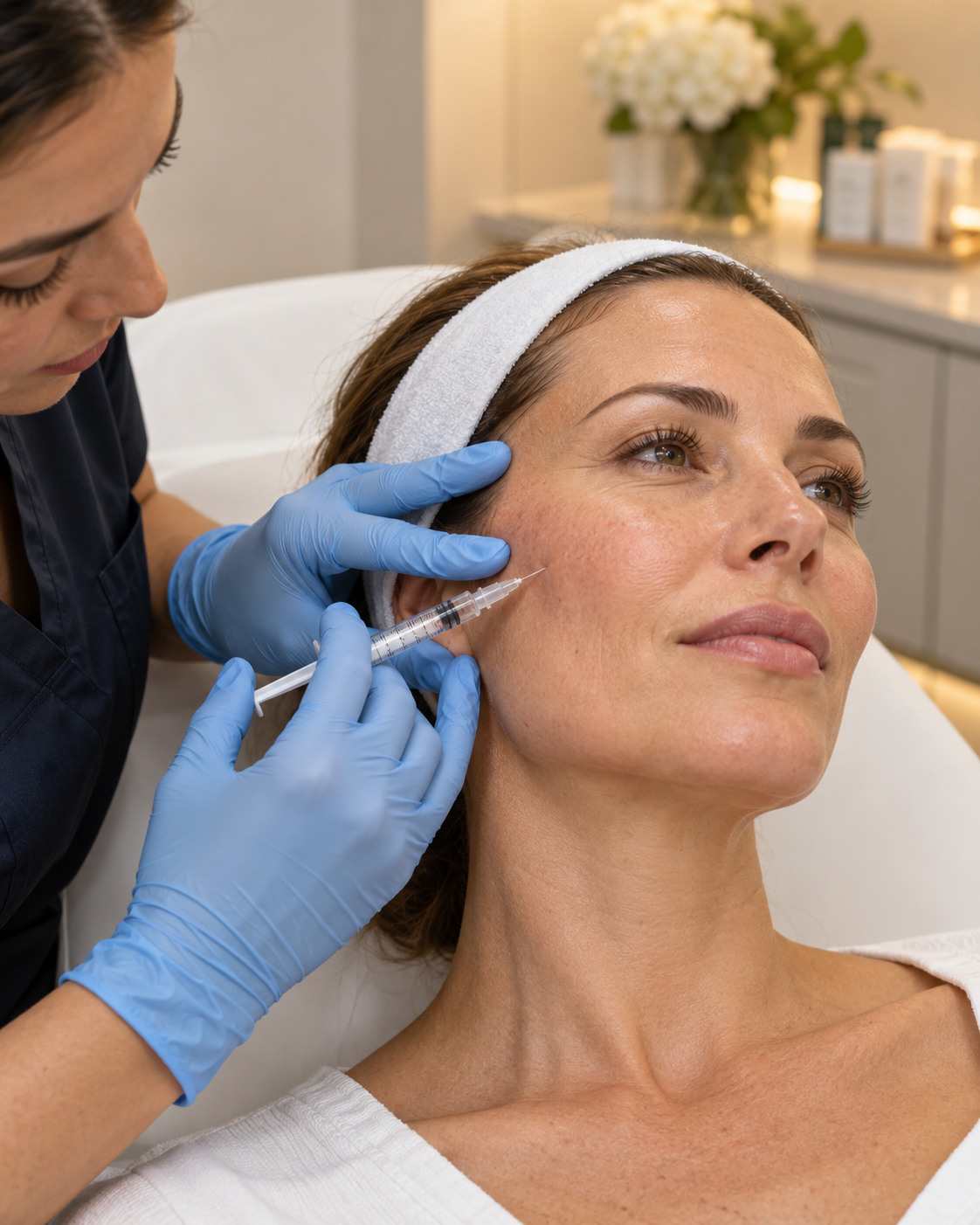
The folds that run from the nose to the corners of the mouth — nasolabial folds, or smile lines — and the lines that drop from the mouth’s corners toward the chin, called marionette lines, are among the most common reasons clients ask about filler. They are also widely misunderstood: these folds are rarely a skin problem. They form because the cheek above them loses volume and descends, deepening the crease where it meets the firmer tissue around the mouth. That is why simply filling the fold itself often disappoints, and why treatment at Aurora 80 Aesthetics usually starts with the structure — restoring cheek support so the fold softens naturally — and only then refines the line directly if it is still needed.
What causes it
- Cheek volume loss and descent: As mid-face fat pads shrink and shift downward with age, the cheek folds over the fixed tissue around the mouth, creating and deepening the nasolabial fold.
- Collagen loss: Less collagen means less firmness in the skin over the fold, so the crease holds its shape even at rest.
- Facial structure and expression: Some faces are simply built with more prominent folds, and a lifetime of smiling etches them in — they are present, to some degree, on almost every adult face.
- Weight loss: Significant weight loss, including GLP-1–assisted loss, reduces mid-face volume and can deepen folds noticeably.
Treatments that help
- Dermal fillers: Hyaluronic acid filler restores support in the cheeks, which lifts and softens the fold indirectly, and can be placed directly in the fold or marionette lines where appropriate. The approach — structure first, line second — is what keeps results looking natural.
- Sculptra: An injectable biostimulator that rebuilds your own collagen across the mid-face over several months. Suited to folds caused by broad volume and firmness loss rather than a single crease.
- NOUVADerm laser: Works on the skin quality over the fold — texture and firmness — as a complement to the structural work injectables do.
- Aura 3D skin analysis: A 3D imaging assessment that documents facial structure and volume, so a staged plan can be measured as it progresses.
Frequently asked questions
Should the fold itself be filled?
Sometimes — but often the better first step is restoring the cheek support above it, which softens the fold as a side effect and looks more natural. Filling a fold without addressing its cause can add heaviness to exactly the wrong place. Your nurse will assess which approach, or which combination, suits your face.
Will my smile lines disappear completely?
They should not — nasolabial folds are a normal part of every face, including young ones. The goal is to soften a fold that has deepened out of proportion, not to erase it. Complete erasure is what makes treated faces look unnatural.
How long does filler for folds last?
Cheek filler commonly lasts twelve months or longer; filler placed directly in folds and marionette lines typically lasts six to twelve months, as the mouth area moves constantly. Your nurse will give you a realistic range for your plan.
What is the difference between filler and Sculptra for folds?
Filler restores volume immediately and precisely, in the area it is placed. Sculptra works gradually over months, stimulating collagen across a broader area. Fold plans frequently combine them: filler for structure now, Sculptra for ongoing firmness.
Can folds come back after weight loss is stable?
Filler and collagen results last their usual duration regardless; if weight continues to change significantly, volume loss continues too. It is usually more efficient to treat folds once your weight is stable — a consultation during weight loss can still be useful for planning.
Book a consultation at Aurora 80 Aesthetics in Coal Harbour. We will look at why your folds have deepened — not just where they are — and recommend the approach that treats the cause. Book online: https://aurora80aesthetics.janeapp.com
