
Acne Scars: Subcision Add on prp
Subcision is a minimally invasive non surgical procedure used to treat depressed acne scars, such as rolling scars or boxcar scars. It involves breaking up the fibrous bands of scar tissue beneath the skin’s surface that tether the scar, allowing the skin to lift and smooth out over time. Subcision is a popular treatment for individuals looking to improve the texture and appearance of acne-scarred skin


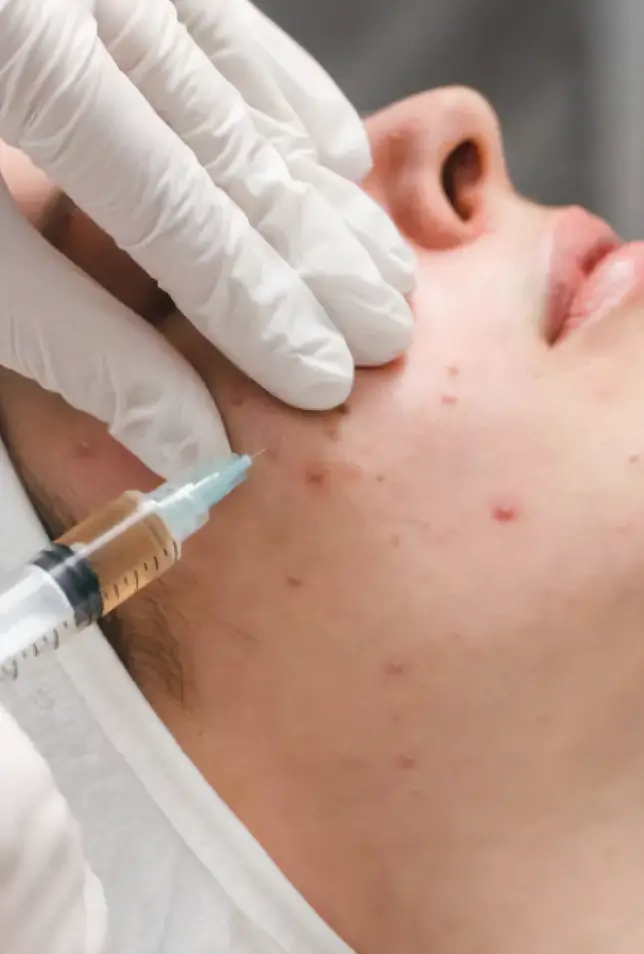
How Subcision Works
- Scar Formation: Depressed scars are caused by fibrous bands anchoring the skin down to the underlying tissue, creating an uneven surface.
- Cannula Insertion: A fine, hypodermic needle or cannula is inserted under the scar.
- Release of Fibrous Bands: The needle is moved in a fanning motion to break up the fibrous tissue holding the scar down.
- Healing and Collagen Production: The body’s natural healing response is triggered, stimulating collagen production, which helps fill in the scar over time.
Benefits of Subcision
- Effective for Depressed Scars: Particularly beneficial for rolling scars and some boxcar scars.
- Minimally Invasive: No surgery is required, and downtime is minimal.
- Boosts Collagen Production: Promotes natural healing, improving skin texture and firmness.
- Customizable: Can be combined with other treatments like microneedling, chemical peels, or laser therapy for enhanced results.
Procedure Overview
- Consultation: The practitioner assesses the scars to determine if subcision is suitable and discusses the expected results.
- Preparation:
- The skin is cleansed and a local anesthetic is applied or injected to minimize discomfort.
- Subcision Procedure:
- The needle is inserted under the skin and moved back and forth to break up scar tissue.
- Multiple scars may be treated in a single session, depending on the severity and area.
- Post-Treatment:
- Pressure or compression may be applied to reduce bruising.
- A soothing cream or antibiotic ointment is often applied.
Recovery
- Downtime: Minimal, but patients may experience swelling, bruising, or redness for a few days.
- Healing: Skin heals within 1–2 weeks, but collagen production continues for several months.
- Multiple Sessions: Most patients require 2–6 treatments spaced 4–6 weeks apart for optimal results.
Ideal Candidates
- Individuals with rolling scars or boxcar scars caused by acne.
- Patients with realistic expectations, as subcision improves scars but may not eliminate them entirely.
Results
- Gradual Improvement: Results become noticeable as the skin heals and collagen builds over several weeks.
- Long-Lasting Effects: Once the fibrous bands are broken, scars are unlikely to reform, especially with proper skin care.
Risks and Considerations
- Temporary Side Effects: Swelling, bruising, and mild discomfort at the treatment site.
- Hyperpigmentation: Rare, but more common in darker skin tones if not properly managed.
- Infection: Rare if performed in a sterile environment by a trained professional.
Combining Subcision with Other Treatments
For enhanced results, subcision is often combined with:
- Microneedling: Further stimulates collagen production.
- PRP (Platelet-Rich Plasma): Speeds up healing and boosts collagen synthesis.
- Lasers: Smooths and resurfaces the skin.
- Dermal Fillers: Temporarily fill the scar for immediate improvement.
My skin has never felt this smooth and radiant. Thank you for the amazing care!
The team is professional and friendly. Highly recommend their treatments!
Absolutely love the results! My confidence is at an all-time high.
Exceptional service and noticeable results. I’ll be coming back for sure!
Finally found a clinic that understands my skin. Thank you so much!
Great experience! Very knowledgeable, and the results speak for themselves.
I’ve been getting compliments non-stop. The best decision I ever made!
My skin feels healthier and refreshed. Wonderful services at aurora 80!
Highly professional and caring. I’m so happy with my glowing skin!
All of our medical facials offer package pricing for 3 and 6 sessions. Please ask us about pricing during your consultation.
